
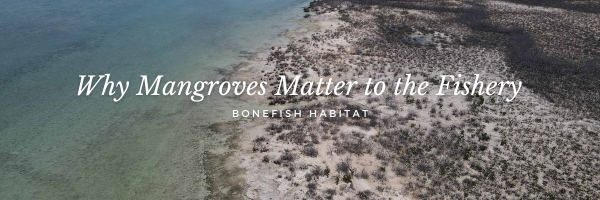
A mangrove shoreline can look quiet until the tide begins to rise. Water reaches the roots, bait moves along the edge, and a bonefish appears where there was barely enough depth to float a fly. Understanding bonefish habitat helps you recognize these opportunities and appreciate the coastal system behind them.
Around East End Lodge on eastern Grand Bahama, flats, creeks, mangrove shorelines, and channels give that system its character. Learning how these places connect makes a day on the water more rewarding, whether you are preparing your first cast or returning to familiar flats.
Mangroves Are Part of a Larger Habitat
Bonefish use a mosaic of coastal environments, including sand, seagrass, mangrove areas, and adjacent deeper water. No single shoreline provides everything they need throughout their lives.
Mangrove roots create shelter for small marine animals and help hold sediment in place. The surrounding habitat supports a food web that includes the crustaceans bonefish eat. That does not mean every mangrove edge holds fish, or that all young bonefish grow up among the roots. Water depth, bottom type, access, and conditions all matter.
For anglers, the useful question is how a shoreline connects to nearby feeding areas and travel routes. A narrow opening beside the trees may deserve more attention than a long, featureless stretch of bank.
Read the Water Before You Cast
On a rising tide, previously exposed shallows become accessible. As water falls, fish may move toward creek mouths, channels, and deeper edges. These are useful patterns to watch, rather than a timetable that every fish follows.
Ask your guide what the water is doing at the flat itself. A tide prediction gives context, but wind and local geography influence the depth and current you actually encounter.
Before casting, watch for a moving shadow, a brief flash, a tail, or a push of water. Mangrove reflections and darker bottom can obscure the fish’s outline. Once you locate movement, establish its direction before putting the fly down.
Present the Fly With Room to Work
Fishing near roots rewards control. A cast placed too close to the branches can leave little room to retrieve the fly or respond when a hooked fish runs.
Keep loose line clear of your feet and equipment. Listen for your guide’s placement instructions, and choose an open presentation lane when one is available. Let the fly reach the appropriate depth before beginning the retrieve.
If you lose sight of the fish, say so. Another cast made without a clear target may disturb the opportunity. A short pause often gives your guide time to relocate the fish and adjust the boat.
Why Connectivity Matters on Grand Bahama
A productive flat depends partly on access to the water around it. Blocked creeks can restrict fish passage and alter tidal flow, while damage to mangroves affects more than the appearance of a shoreline.
Hurricane Dorian damaged mangrove habitat on Grand Bahama in 2019. Bonefish & Tarpon Trust and its partners have supported restoration in the northern Bahamas, alongside work addressing obstructed tidal creeks. Replanting and restoring water movement address different problems; successful recovery depends on the needs of each site.
For a visiting angler, this makes conservation tangible. The creek carrying water onto today’s flat is part of the same network that needs protection beyond the fishing day.
Fish With the Habitat in Mind
Avoid breaking branches or trampling roots, collect discarded line, and follow your guide’s advice about suitable wading routes. Keep released bonefish in the water whenever possible and minimize handling.
East End Lodge’s nearby flats and the channels across Grand Bahama’s eastern horn offer a practical setting for learning how tide and habitat work together. Ask why your guide selected a particular shoreline, then notice what changes as the water moves.
When planning a stay, share your experience and interests with the lodge. A day spent learning to read this connected landscape can leave you with better decisions on the bow and a lasting reason to protect the fishery.