
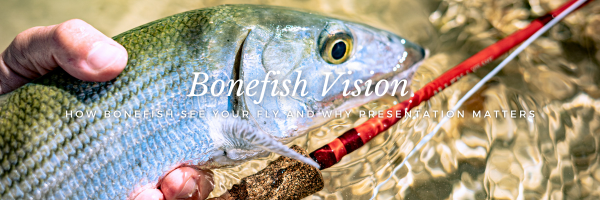
Few fish test an angler’s presentation quite like a bonefish.
You can make the perfect cast, place your fly exactly where your guide instructed, and still watch the fish ignore it completely. Other times, a bonefish changes direction immediately and eats with confidence.
What’s the difference?
Often, it comes down to what the fish sees.
Understanding how bonefish use their vision can help you make better presentations, choose more effective retrieves, and avoid the small mistakes that cause fish to spook. While you can never see the flats exactly as a bonefish does, learning how they perceive their surroundings gives you a better understanding of why they react the way they do.
Built for Life on the Flats
Bonefish spend nearly their entire lives in shallow, open water.
Unlike fish that hide in deep structure or heavy cover, they depend heavily on their eyesight to find food and avoid predators.
On the flats, danger can come from almost anywhere.
Sharks patrol deeper channels.
Barracuda wait motionless along drop-offs.
Ospreys and other birds hunt from above.
To survive, bonefish must constantly scan their surroundings while searching for food.
That combination of feeding and vigilance is one reason they’re such challenging fish to fool.
Wide Field of View
One advantage bonefish have is the position of their eyes.
Located high on each side of the head, their eyes provide an exceptionally wide field of view.
This allows them to monitor much of the water around them without constantly turning.
While this broad vision helps detect predators, it also means bonefish notice careless movements surprisingly well.
An angler shifting suddenly on the bow, a fly line slapping the water, or a shadow moving across the flat can all alert nearby fish.
Often, they detect the threat long before the angler realizes anything happened.
Bonefish See Movement First
Many anglers spend hours deciding between fly colors.
Experienced guides often focus on something else entirely.
Movement.
A bonefish is far more likely to notice how a fly behaves than whether it’s tied with tan or olive materials.
Natural prey rarely moves in a straight line.
Shrimp dart, pause, and change direction.
Small crabs scoot across the bottom before stopping suddenly.
A fly that mimics those subtle movements appears far more convincing than one retrieved at a constant speed.
That’s why guides often remind anglers to watch the fish instead of automatically stripping the line.
The fish’s body language usually tells you how the retrieve should change.
Contrast Matters More Than Bright Colors
The shallow waters of the Bahamas are remarkably clear.
Light penetrates easily, creating excellent visibility for both anglers and fish.
Because of this, many successful bonefish flies rely on subtle contrast rather than bright, flashy colors.
The fish doesn’t necessarily need to see every detail.
It simply needs to recognize something that resembles food.
A fly with just enough contrast to stand out against the bottom often appears more natural than one that’s overly bright or reflective.
This becomes especially important on sunny days when excessive flash can sometimes appear unnatural.
The Bottom Changes Everything
The same fly may look completely different depending on what’s beneath it.
Over bright sand, darker flies often create better contrast.
Over turtle grass, lighter-colored patterns may become easier for fish to distinguish.
This is one reason experienced anglers carry multiple versions of the same fly pattern.
Changing bottom composition sometimes matters more than changing fly style.
Matching your fly to the environment helps create a presentation that fish can locate without appearing unnatural.
Bonefish Notice Shadows
Light creates visibility, but it also creates shadows.
A large shadow passing over a shallow flat often signals danger.
Birds of prey, boats, and other predators all cast shadows.
Bonefish have learned to react quickly.
This is why guides frequently position the skiff carefully before approaching fish.
They aren’t just considering casting angles.
They’re thinking about where the boat’s shadow will fall.
As an angler, minimizing unnecessary movement helps reduce the chance of creating sudden changes that attract unwanted attention.
Why Fly Placement Matters
One of the biggest mistakes beginners make is landing the fly too close to the fish.
A shrimp doesn’t suddenly appear inches in front of a bonefish.
Neither should your fly.
Instead, guides typically recommend leading the fish so the fly enters its field of vision naturally.
The fish discovers it while continuing its normal path.
This creates a much more believable presentation.
When the fly lands too close, the splash itself often becomes the first thing the bonefish notices—and not in a good way.
Bonefish Have Time to Decide
Unlike highly aggressive predators that strike instantly, bonefish often inspect a potential meal.
You’ll sometimes watch a fish follow the fly for several feet before deciding whether to eat.
Those few seconds are valuable.
Sudden changes in retrieve, excessive stripping, or lifting the fly too soon can all cause the fish to lose interest.
Patience is often rewarded.
Many successful eats happen only after the fly pauses briefly, allowing the fish to close the distance naturally.
Polarized Glasses Help You See What Bonefish See
Quality polarized sunglasses don’t improve the fish’s vision.
They improve yours.
By reducing glare, polarized lenses allow anglers to detect fish earlier and better judge their behavior.
You’ll see:
- Changes in direction
- Feeding posture
- Body language
- Bottom composition
- Water depth
All of these observations help you make better presentations before the fish ever notices your fly.
For many experienced flats anglers, polarized sunglasses are every bit as important as the rod itself.
Every Presentation Tells a Story
Think of your fly as an actor.
Everything it does tells the fish something.
Does it behave like a relaxed shrimp?
A startled crab?
Or something that doesn’t belong?
Bonefish evaluate those signals in seconds.
When every part of the presentation feels natural—from the cast to the retrieve—the fish is much more likely to commit.
Local Knowledge Makes Presentations Better
Experienced guides don’t simply point out fish.
They interpret behavior.
They recognize whether a bonefish is actively feeding, cruising quickly, or becoming cautious.
Those observations help determine:
- Where the fly should land
- How long to wait before stripping
- How quickly to retrieve
- When to stop moving the fly altogether
These small adjustments often mean the difference between a refusal and a solid hookup.
Learning to Read the Fish at East End Lodge
The expansive flats surrounding East End Lodge provide countless opportunities to observe bonefish in clear, shallow water.
Rather than making blind casts, anglers spend much of the day watching fish behave naturally before presenting a fly.
Experienced local guides help guests understand not only where the fish are, but how they’re behaving and why.
Many visitors discover that by the end of their trip, they’re seeing subtle reactions they completely missed on the first day.
That’s one of the most rewarding parts of bonefishing.
The fish begin teaching you how they want to be caught.
See the Fish Before Thinking About the Fly
Choosing the right fly certainly matters.
So does having the right rod, fly line, and leader.
But none of those things matter if the presentation doesn’t make sense to the fish.
Bonefish rely on exceptional vision to survive every day on the flats.
They notice movement.
They detect shadows.
They evaluate potential food carefully.
The anglers who consistently fool them understand that success begins long before the hookset.
It starts with seeing the flat through the fish’s eyes.
When you slow down, observe carefully, and let the fish tell you what it wants, your presentations become more natural—and your chances of hearing the reel scream across the flats increase dramatically.