
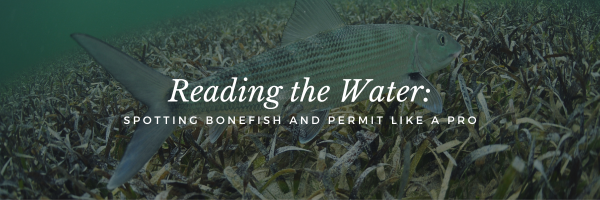
When it comes to flats fishing, success often starts long before you make your first cast. It begins with your eyes—reading the water, scanning for signs, and learning to spot fish before they spot you. Bonefish and permit are masters of camouflage, blending into their surroundings with impressive skill. But if you know what to look for—and how to look—you’ll start to see things differently.
At East End Lodge, many anglers say the first breakthrough isn’t catching a fish—it’s seeing one for the first time. Once you start to recognize the subtle tells of a cruising bone or a shadowy permit, the flats open up in a whole new way. Here’s how to train your eyes, read the water, and start spotting fish like a pro.
Train Your Vision, Not Just Your Cast
The first thing to understand is that spotting fish on the flats is a skill—and like casting, it takes practice. You’re not looking for a full silhouette or splashy movement. You’re looking for clues.
Start by slowing down. Before you even think about casting, stop and observe. Let your eyes adjust to the water. Scan methodically, starting close to your feet and moving outward in wide arcs. Don’t just stare—look through the water, not just at the surface.
What You’re Actually Looking For:
- Movement: Bonefish often reveal themselves with a slight twitch of the tail, a flash of silver, or a puff of sand as they feed. Permit tend to move more deliberately and are often seen when cruising or tailing in slightly deeper water.
- Shadows: Sometimes you won’t see the fish—you’ll see the shadow it casts on the bottom. These shadows move differently than the natural ripple or grass pattern. They glide, shift direction, or pause briefly before continuing.
- Color Change: A slight change in contrast or a “ghostly” shape that doesn’t match the surrounding bottom could be a fish. Bonefish, in particular, can look like a slightly greener or grayer blur depending on their surroundings.
- Tailing: When fish feed head-down in shallow water, their tails often break the surface. Tailing fish are actively feeding—prime targets for a cast.
How Light and Angle Affect Visibility
The sun is your best friend and worst enemy on the flats. For the best visibility, try to keep the sun behind you or at your shoulder. This reduces glare and helps you see into the water.
Overhead sun (midday) provides the best vertical penetration for sight fishing. Early morning or late afternoon can be beautiful times to fish, but lower sun angles also create longer shadows and more glare, making spotting fish tougher.
If the wind picks up, look for wind lanes or slightly rippled areas where fish may still be visible. In cloudy or choppy conditions, your chances improve if you focus on spotting movement and shadows rather than full silhouettes.
Polarized Glasses Are a Must
This isn’t a suggestion—it’s a necessity. Polarized sunglasses cut glare from the water’s surface and allow you to see into the water column. Without them, you’re fishing blind. Amber, copper, or bronze lenses are ideal for flats environments because they enhance contrast and help you detect movement more easily.
Teamwork with Your Guide
At East End Lodge, your guide is your second pair of eyes—and a seasoned one at that. Our guides spend hundreds of days a year reading the flats. When your guide calls out a fish, they’ll give a clock direction and distance (e.g., “10 o’clock, 40 feet”). It’s helpful to respond out loud with what you see—or don’t see—so they can adjust your positioning or help you lock on.
If you’re not seeing the fish right away, don’t panic. Stay calm, keep scanning, and listen to your guide’s cues. When you finally spot that fish yourself, it’ll feel like someone just turned the lights on.
Practice Spotting Without a Rod in Hand
One of the best ways to sharpen your fish-spotting skills is to practice when you’re not fishing. When you’re out with your guide, take turns standing on the bow just looking. Without the pressure of casting, you’ll be surprised how quickly your eyes start to pick up subtle signs of life on the flats.
This also helps you learn what bonefish and permit look like in different light and depth conditions. Over time, you’ll develop the kind of instinctive awareness that seasoned anglers rely on.
Permit vs. Bonefish: Spotting Differences
- Bonefish tend to cruise in small schools or pairs and are often found in shallower water. They’re faster-moving, and their silvery sides can flash brightly when they turn.
- Permit are often solo or in very small groups. They’re darker in appearance and usually found slightly deeper. Because of their broader shape, they often look like dinner-plate-sized shadows slowly gliding across the bottom.
Permit can be harder to spot—but once you get your eye dialed in, they become unmistakable.
The Flats Are Speaking—Learn to Listen
Reading the water is about more than catching fish—it’s about becoming a student of the flats. The more time you spend observing, the more you’ll notice. And the more you notice, the better your odds of connecting with the fish you’re after.
At East End Lodge, we believe sight fishing is one of the most rewarding aspects of saltwater angling. When it all comes together—the perfect light, the spotted fish, the accurate cast—it’s a moment you won’t forget.
So next time you’re on the bow, slow down. Look closely. Stay patient. The fish are there—you just have to train your eyes to see them.