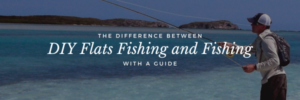
Flats fishing has a certain romantic appeal. Wide-open water, tailing fish in the distance, and the idea of figuring it all out on your own. For some anglers, that challenge is part of the draw. But when it comes to bonefish—especially in complex, ever-changing environments—the difference between DIY flats fishing and fishing with a guide is far bigger than most people expect.
Both approaches have their place. Understanding the difference helps you decide how you want to spend your time on the water—and what kind of experience you’re really after.
DIY Flats Fishing: Freedom, Exploration, and a Steep Learning Curve
DIY flats fishing offers independence. You set your schedule, explore at your own pace, and learn through trial and error. For anglers who enjoy problem-solving and aren’t fixated on numbers, this can be deeply rewarding.
But the learning curve is real.
You’re responsible for:
- Reading tides without local context
- Interpreting light, wind, and bottom changes on the fly
- Finding productive water—and knowing when it isn’t productive
- Making decisions without feedback
Bonefish don’t give many second chances. One misread flat or poorly timed tide can mean hours without a real opportunity. DIY anglers often spend more time searching than fishing, especially in unfamiliar systems.
DIY trips are about discovery—but they demand patience, adaptability, and a willingness to accept slower days.
Fishing with a Guide: Efficiency, Insight, and Opportunity
Fishing with a guide doesn’t remove the challenge—it removes the guesswork.
Guides compress years of local knowledge into each day on the water. They know:
- Where fish move during specific tides
- How wind direction reshapes the flats
- Which areas fish push onto—or avoid—under certain conditions
- When to stay put and when to move
Instead of decoding the entire system, you’re focused on execution: seeing fish, making good casts, and learning in real time.
A good guide doesn’t fish for you. They put you in the best possible position to succeed, adjusting constantly as conditions change.
The Biggest Difference: Time on the Clock
The most overlooked difference between DIY fishing and guided fishing is time efficiency.
On a DIY trip, a “slow morning” can quickly turn into a lost day. On a guided trip, slow conditions trigger adjustments—different flats, different tide stages, different strategies.
Every decision is intentional. Every move has context.
At East End Lodge, guides are reading multiple variables simultaneously: weather shifts, tidal timing, light angles, and fish behavior. That ability to adapt is what turns difficult days into productive ones.
Skill Development: Learning Faster with a Guide
Fishing with a guide accelerates learning in a way solo fishing can’t.
Guides help you:
- Improve casting angles and timing
- Read water more effectively
- Adjust presentation before mistakes compound
- Understand why something worked—or didn’t
Those lessons stick. Many anglers find their DIY fishing improves dramatically after spending time with a skilled guide.
In contrast, DIY anglers often repeat the same mistakes without realizing it—simply because there’s no feedback loop.
Pressure, Fish Behavior, and Local Knowledge
In lightly pressured systems, DIY anglers can do very well. But in popular destinations—or highly dynamic environments—local knowledge matters more than ever.
Bonefish behavior shifts subtly with pressure. Guides see these changes firsthand and adjust accordingly. That awareness often makes the difference between fish that flee and fish that feed.
Guides also understand the rhythm of the water: not just where fish are, but where they will be.
What It Comes Down To
DIY flats fishing offers freedom and discovery. Guided fishing offers efficiency, insight, and consistency. Neither is “better”—they simply serve different goals.
If your priority is exploration and self-reliance, DIY fishing scratches that itch. But if you want to maximize opportunity, shorten the learning curve, and experience the fishery at its best, fishing with a guide changes the equation.
At the lodge level, guides aren’t an add-on—they’re part of the experience. They help you see more, learn more, and make the most of every tide window.
And when that first bonefish tips up, eats clean, and burns off across the flat, the value becomes clear.