
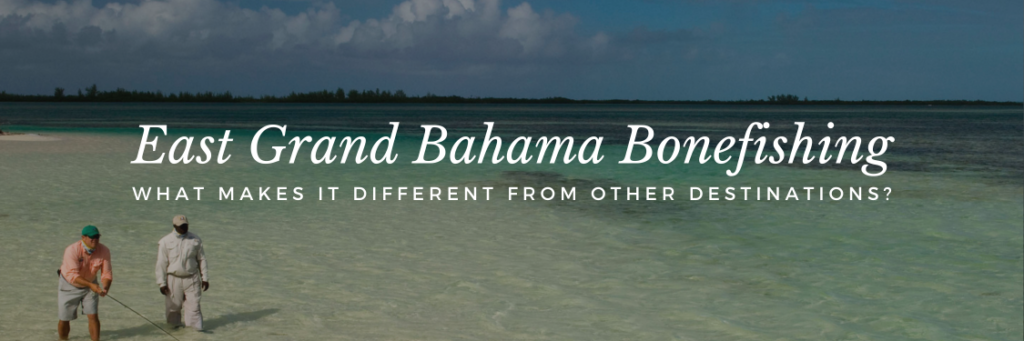
Every bonefishing destination has its own personality.
Some are known for large schools of fish. Others are famous for crystal-clear water, trophy-sized bonefish, or endless stretches of shallow flats.
So what makes East Grand Bahama different?
The answer isn’t just one thing. It’s the combination of expansive habitat, healthy bonefish populations, experienced local guides, and relatively light fishing pressure that creates a unique experience on the water.
For anglers who enjoy sight fishing and learning how bonefish behave in a natural environment, East Grand Bahama offers something that’s becoming increasingly difficult to find—room to explore.
A Landscape Built for Bonefish
The eastern end of Grand Bahama is home to one of the largest interconnected systems of bonefish habitat in the Bahamas.
Miles of shallow flats, winding tidal creeks, mangrove shorelines, sandy basins, and turtle grass meadows create ideal conditions for bonefish throughout the year.
Instead of relying on a handful of productive locations, guides have access to a diverse network of flats that fish differently depending on the conditions.
As tides rise and fall, bonefish move naturally through this system, following food into newly flooded areas before retreating to deeper channels as the water drops.
That variety keeps each day on the water interesting.
Less Fishing Pressure Means More Natural Fish Behavior
One of the biggest advantages of East Grand Bahama is something you don’t immediately notice.
It’s what isn’t there.
Crowded flats.
Multiple boats working the same stretch of water.
Fish that have seen dozens of flies before lunch.
Compared to many well-known bonefishing destinations, the eastern end of the island remains relatively lightly pressured.
That doesn’t mean the fish are easy to catch.
Bonefish are always challenging.
But fish that experience less pressure often behave more naturally.
They’re more likely to continue feeding, follow predictable travel routes, and respond confidently to a well-presented fly.
For anglers, that creates a more authentic sight-fishing experience.
Every Flat Is Different
No two flats look—or fish—the same.
Some feature bright white sand that makes cruising bonefish easy to spot.
Others are covered with turtle grass where fish blend almost perfectly into the bottom.
You’ll also find:
- Hard sand flats
- Soft marl bottoms
- Mangrove shorelines
- Tidal creeks
- Oyster bars
- Small islands
- Protected bays
Each habitat offers different feeding opportunities throughout the tide.
Experienced guides understand how these areas change as water levels rise and fall.
Instead of fishing the same flat all day, they adjust their plan to match the conditions.
The Tides Create Constant Change
Tides are the engine that drives bonefishing.
As water moves across the flats, it changes everything.
A flat that was dry early in the morning may become one of the day’s best feeding areas by midday.
A productive shoreline may become nearly empty as the tide falls and bonefish move toward deeper water.
Because East Grand Bahama offers so many connected habitats, guides have the flexibility to move with the fish rather than waiting for conditions to improve.
That ability to adapt is one of the area’s greatest strengths.
Bonefish Aren’t the Only Attraction
While bonefish are the primary target for most visiting anglers, they’re not the only species found on the flats.
Depending on the season and conditions, anglers may also encounter:
- Permit
- Juvenile tarpon
- Barracuda
- Sharks cruising the shallows
- Various baitfish and other marine life
Even if you never make a cast at these species, seeing them adds another layer to the experience.
The flats are living ecosystems, and every trip offers something different.
Local Knowledge Makes a Difference
Technology has transformed fishing.
GPS units, satellite imagery, and digital tide charts all provide valuable information.
But they can’t replace years of experience on the water.
Local guides develop an understanding that only comes from fishing the same flats day after day.
They know:
- Which flats flood first.
- Where fish enter on an incoming tide.
- Which channels hold fish during low water.
- How wind changes specific areas.
- Where sunlight creates the best visibility.
These details aren’t found on a map.
They’re learned over thousands of days on the water.
That’s why two anglers can fish the same area under similar conditions and have completely different experiences.
Sight Fishing at Its Best
For many anglers, the greatest appeal of East Grand Bahama is the opportunity to sight fish.
Rather than casting blindly and hoping a fish finds the fly, you’re actively searching for bonefish before making your presentation.
Every successful catch becomes a sequence of small decisions.
Spot the fish.
Judge its direction.
Estimate the distance.
Place the fly.
Watch the fish react.
Set the hook.
It’s an incredibly visual style of fishing that rewards observation just as much as casting skill.
Conditions Change Throughout the Day
One reason experienced anglers never describe the flats as predictable is because they’re constantly changing.
Morning light creates different visibility than afternoon sun.
Wind shifts.
Cloud cover moves in.
Water levels rise and fall.
Bonefish respond to all of it.
Success often comes from adapting rather than expecting the conditions to remain the same.
That’s one reason local guides spend so much time watching the water instead of simply running from one location to another.
Conservation Is Part of the Experience
Bonefish are too valuable to be viewed as disposable resources.
Across the Bahamas, conservation has become an important part of protecting both the fishery and the local communities that depend on it.
Responsible catch-and-release practices help ensure future generations can enjoy the same opportunities.
Simple habits make a difference:
- Fight fish efficiently.
- Wet your hands before handling them.
- Minimize time out of the water.
- Revive fish completely before release.
- Avoid unnecessary handling.
Every healthy release helps preserve the fishery.
Why Experienced Anglers Return
Ask returning visitors why they keep coming back, and you’ll hear many different answers.
Some appreciate the quality of the fishing.
Others enjoy the relaxed pace.
Many simply enjoy learning something new each trip.
Bonefishing has a way of keeping anglers curious.
No matter how many fish you’ve caught, the flats always offer another lesson.
A different tide.
A new section of shoreline.
A presentation that works better than expected.
That variety keeps the experience fresh year after year.
More Than Just Fishing
The eastern end of Grand Bahama offers something that’s becoming increasingly rare.
Peace and quiet.
Instead of busy marinas and crowded beaches, much of the area remains remarkably undeveloped.
The drive to the launch.
Birds working the shoreline.
The sound of the push pole moving quietly through shallow water.
These moments become part of the trip.
Many anglers remember them just as clearly as the fish they catch.
The East End Lodge Difference
East End Lodge is uniquely positioned to take advantage of everything this remarkable fishery has to offer.
Located on the eastern end of Grand Bahama, the lodge provides convenient access to an extensive network of productive flats, allowing guides to spend more time fishing and less time traveling.
The experienced local guide team understands these waters through decades of firsthand experience. Rather than following the same routine each day, they adjust their approach based on the tide, weather, wind, and fish behavior.
Guests enjoy comfortable accommodations, personalized service, and the opportunity to fish waters that remain relatively lightly pressured compared to many other destinations.
Just as importantly, East End Lodge embraces a strong conservation mindset, helping protect the fishery that makes this part of Grand Bahama so special.
Every Day Tells a Different Story
The beauty of East Grand Bahama isn’t that every day is the same.
It’s that no two days ever are.
One morning may begin with tailing bonefish feeding across ankle-deep sand flats.
The next afternoon might find fish cruising mangrove edges as the tide begins to fall.
Wind shifts.
Water moves.
Fish adapt.
And every change presents another opportunity to learn.
That’s what keeps anglers coming back to East Grand Bahama.
Not because they know exactly what will happen.
But because they know every day on the flats has the potential to teach them something new.
Whether it’s your first bonefishing trip or your fiftieth, the combination of diverse habitat, experienced guides, healthy fisheries, and a commitment to conservation makes East Grand Bahama one of the most rewarding places in the Bahamas to pursue the elusive “ghost of the flats.”